01 · Visibility
Connect the bill to the work.
Associate workloads, teams, applications and environments with route decisions, validation, latency and cost evidence.


AERO connects workload decisions, cost evidence, ownership, validation and quality so teams can understand what ran, why it ran, what it cost and whether the outcome justified the spend.
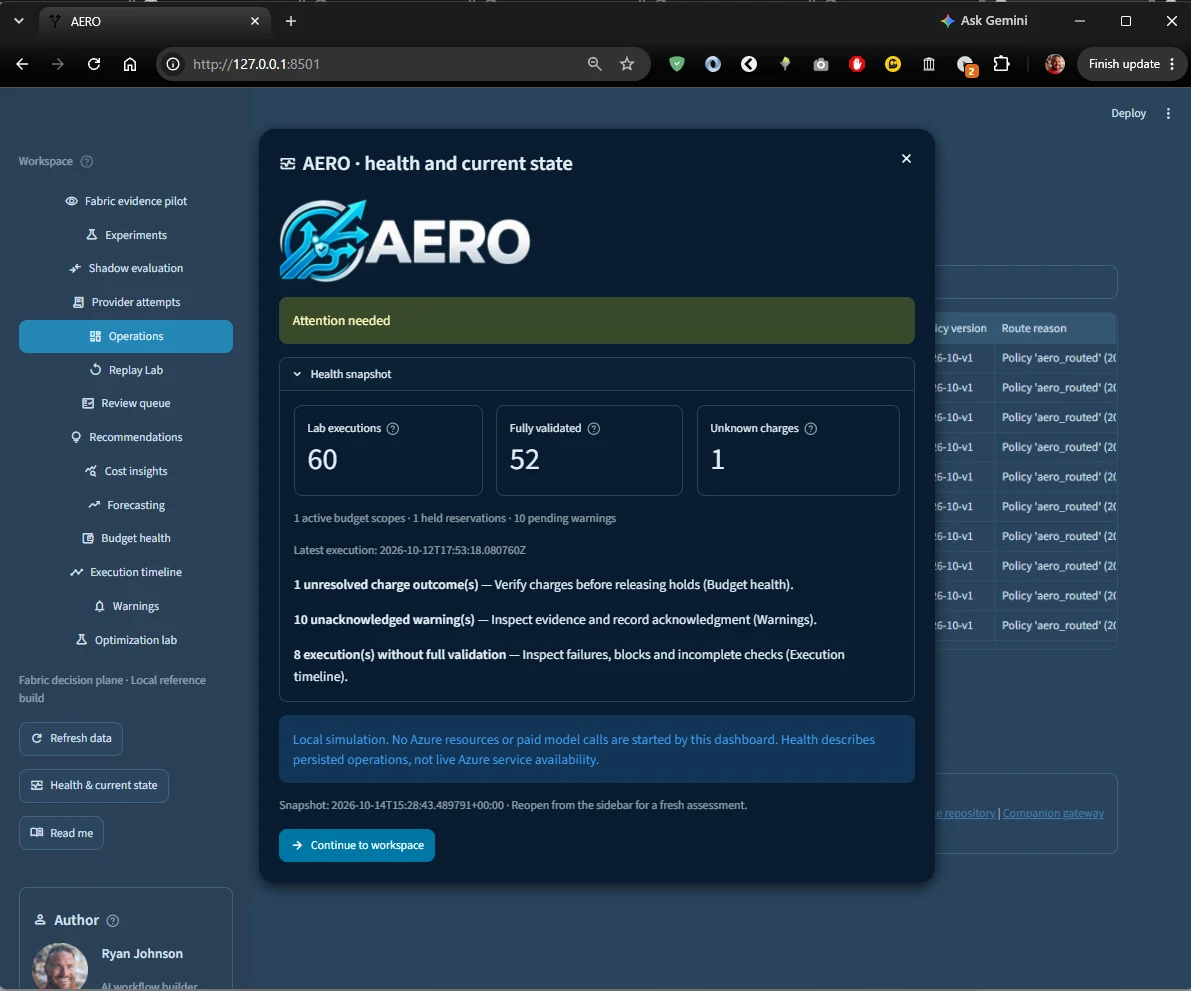
AERO is designed around a simple question: can a technical execution be connected to an owner, a policy decision, a reliable cost fact and an accepted business outcome?
Associate workloads, teams, applications and environments with route decisions, validation, latency and cost evidence.
Reserve estimated cost against matching scopes and preserve holds when charges are uncertain instead of silently releasing budget.
Compare equivalent strategies, test output quality and expose whether a candidate actually meets improvement criteria.
Separate technical completion from business-task acceptance and include the cost of verification, review and failed attempts.
The health view brings execution status, validation gaps, unknown charges and unacknowledged warnings into one operator-facing assessment.
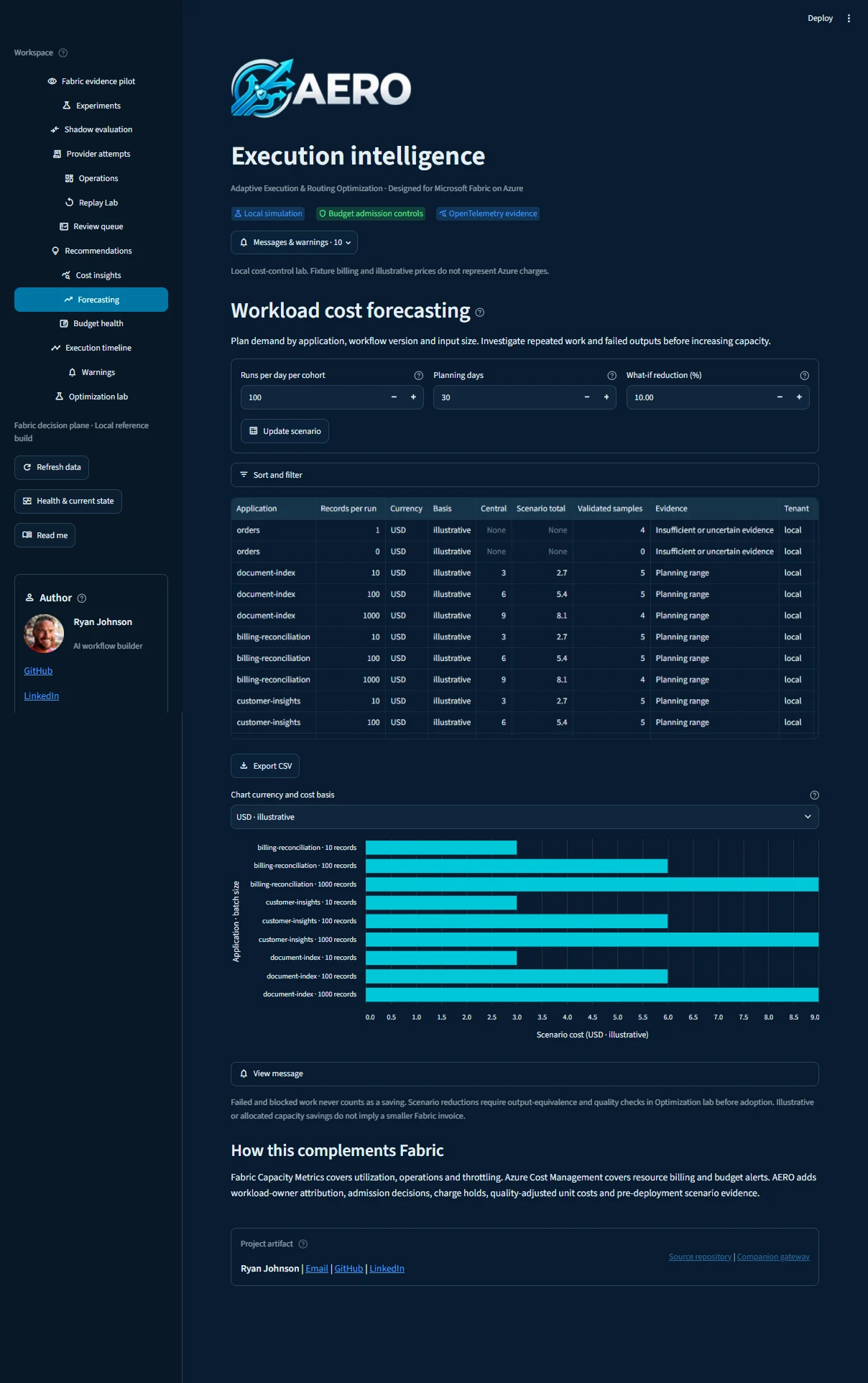
Forecasting explores application, workflow and input-size scenarios while keeping the cost basis explicit. The screen also reinforces that failed or blocked work is not automatically a saving and that planning reductions still require quality checks.
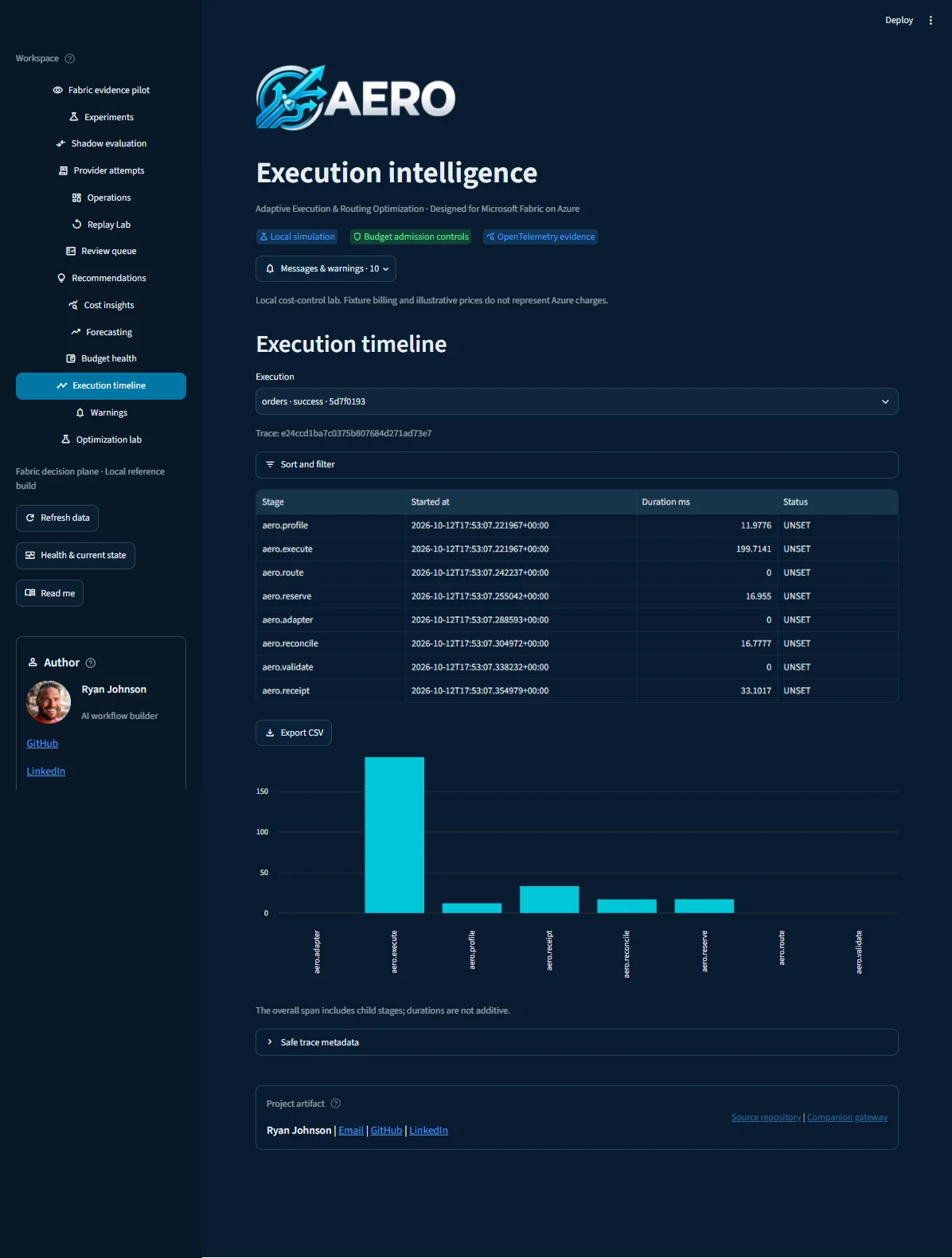
The execution timeline exposes stage-level duration across profiling, routing, reservation, adapter execution, reconciliation, validation and receipt creation. That makes the path itself reviewable instead of leaving operators with only a final spend number.
OpenTelemetry evidence is part of the product direction so cost, timing and execution context can be connected rather than analyzed in isolation.
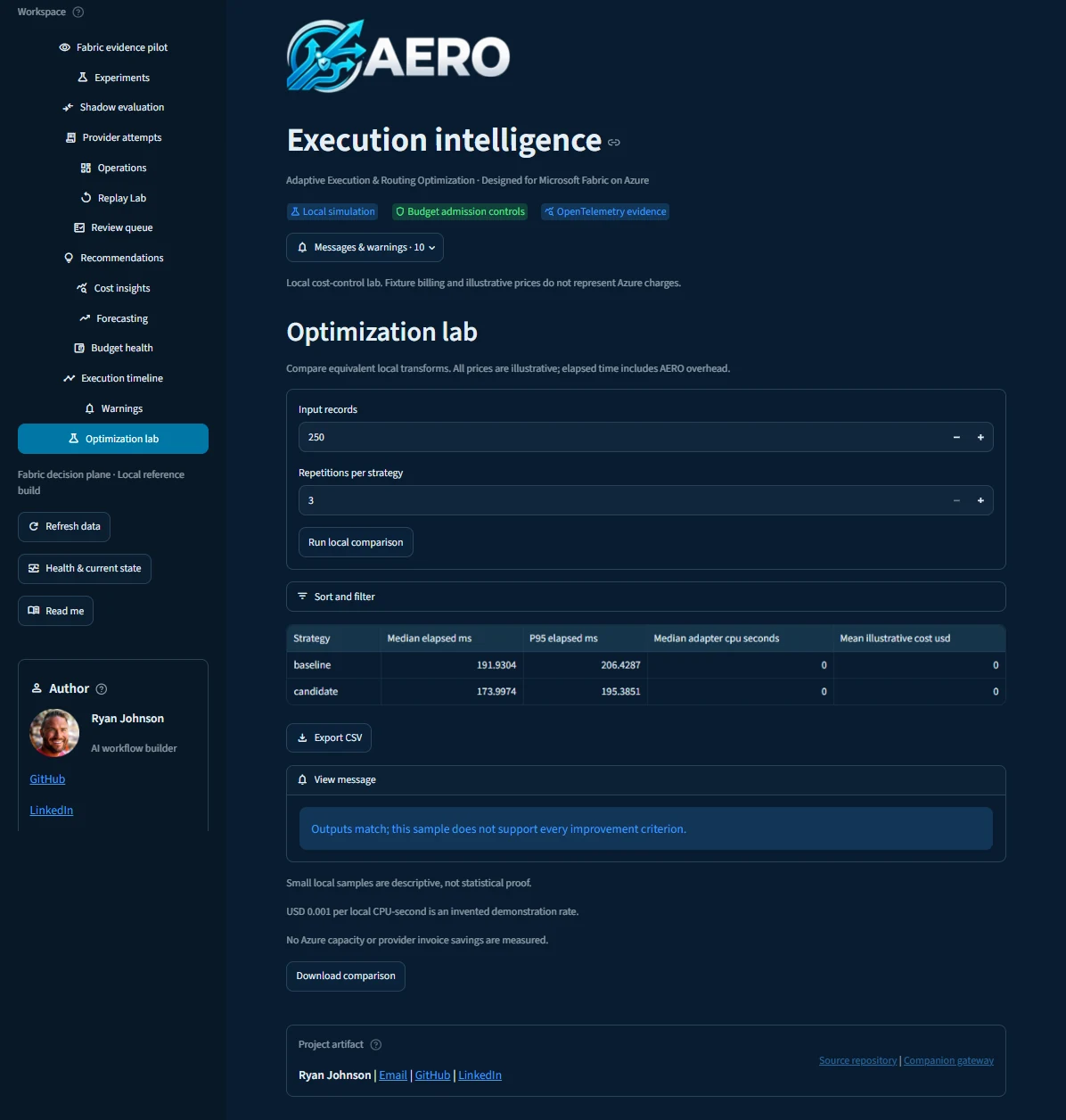
The Optimization Lab compares equivalent local transforms and measures elapsed time while checking whether outputs still match. A candidate can be faster without automatically qualifying as an improvement.
The Fabric evidence pilot is observation-first: it records what is known, what is missing and why a source should or should not be trusted for a decision.
That discipline is intentional. Pipeline history alone does not establish capacity consumption, billing, output acceptance or business success.
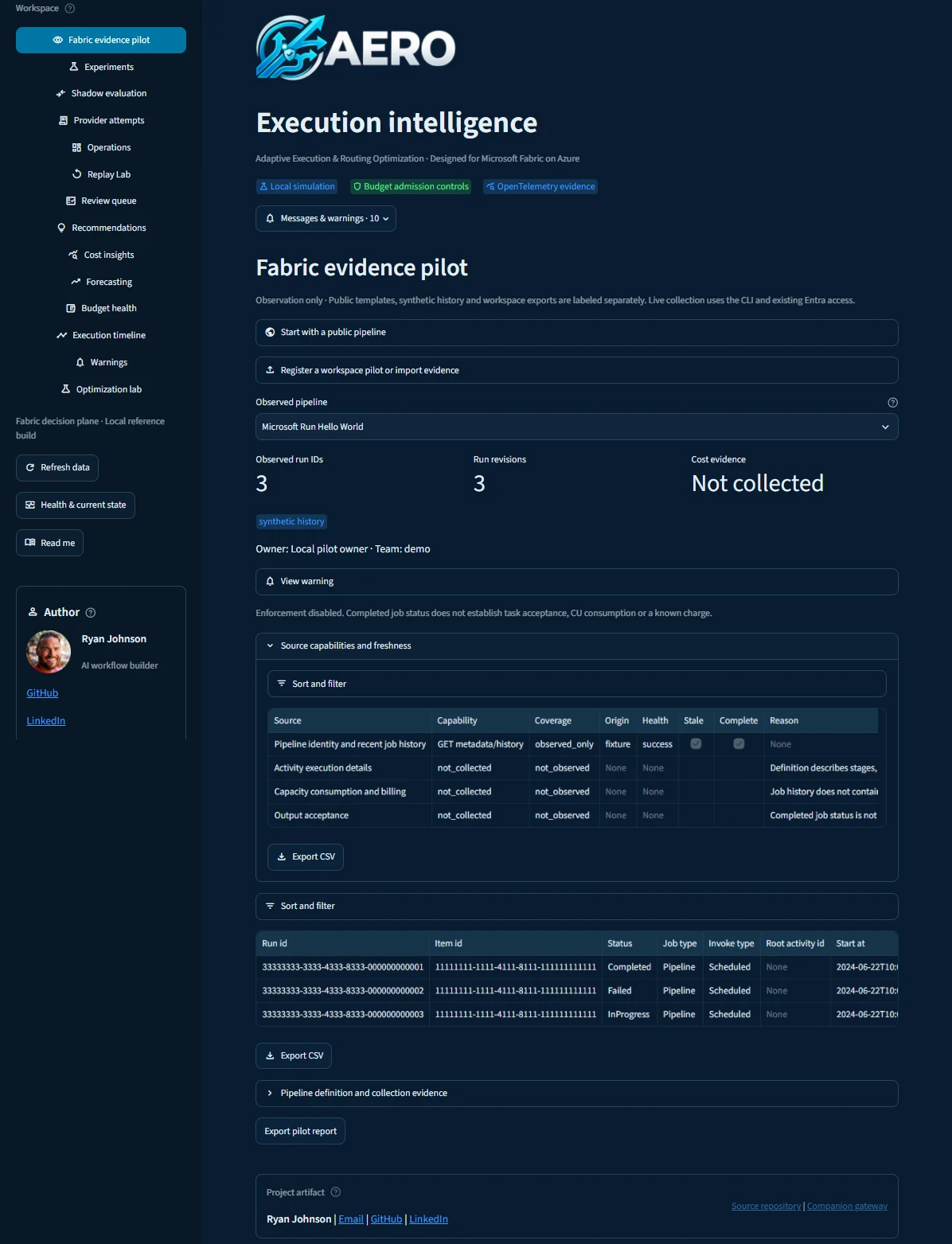
The product already exposes multiple operational surfaces. The screenshots below are the supplied high-resolution application views—not recreated mockups.
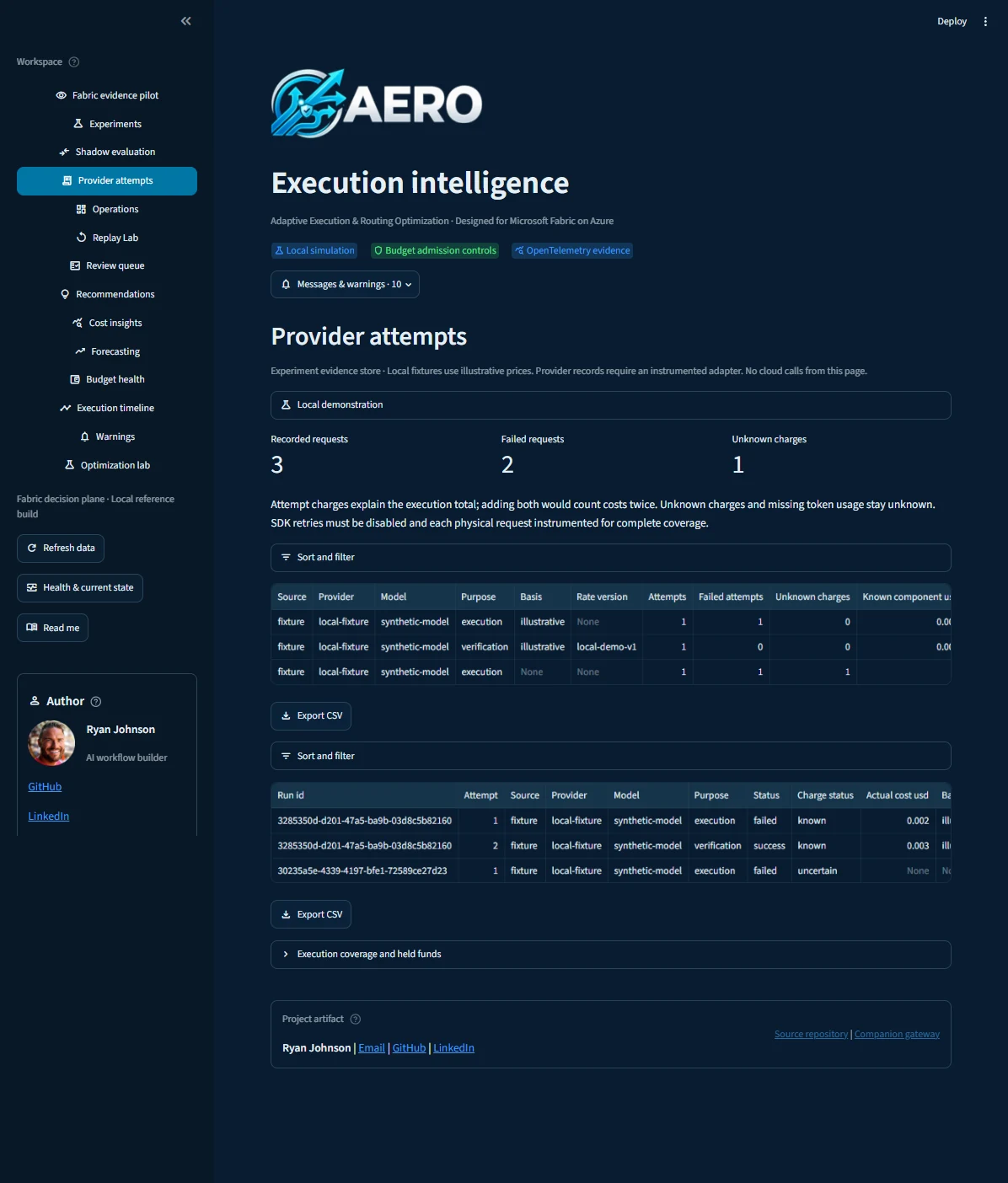
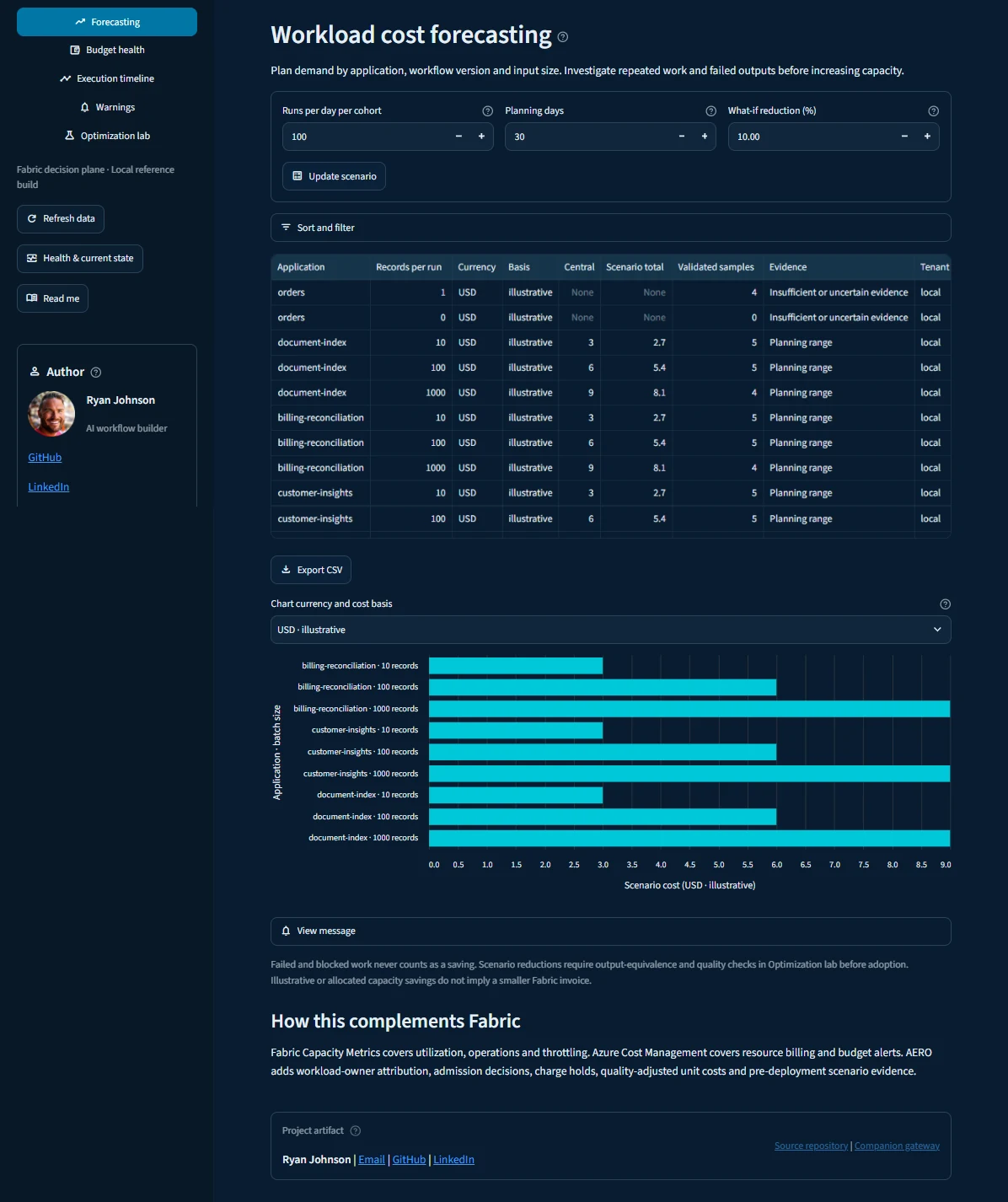
AERO is being developed as an enterprise execution-intelligence layer for organizations that need better evidence around workload cost, quality, ownership and optimization decisions.